Background
The goal of this programmatic research – “Paving the way towards lifewide and lifelong learning: Exploring and fostering metacognition for learning and transfer” (NIE Research Project OER 02/21 LNH) – can be viewed against the backdrop of the future economy and the imperative of developing in students the future skills of the 21st century, such as problem solving and critical thinking. There is burgeoning attention on equipping students with lifelong learning skills as a way of preparing students for the uncertain future. Scholars searching for new models of learning for the 21st century education have noted that learners are more successful at acquiring new skills and competencies when they have strong metacognitive abilities. Despite the importance ascribed to metacognition in educating 21st century learners, many students, including adolescents in Singapore, were reported to have poor awareness of their thinking processes, limited abilities to apply metacognitive strategies, and low utilization of such strategies during learning.
Aims of the Programme
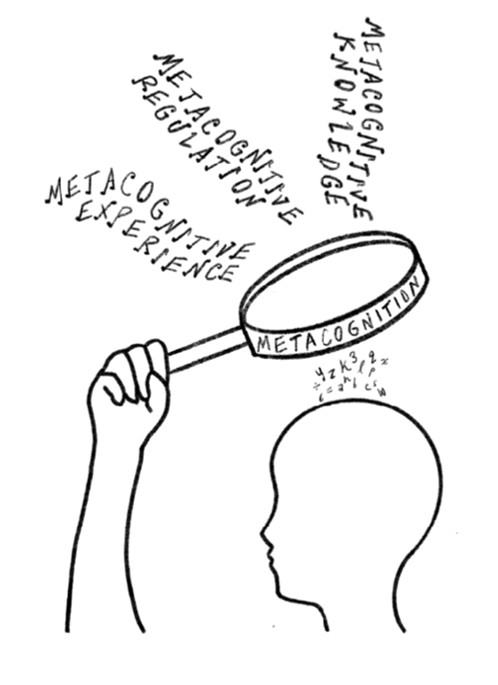
Seeking to understand Singapore students’ metacognition, a team of NIE researchers put forth a programmatic research aiming to obtain insights in the local school context, and foster students’ and teachers’ metacognitive competencies. Funded by an Education Research Funding Programme by the Singapore Ministry of Education, the key objectives of the research include:
(1) developing a comprehensive knowledge base of students’ metacognition, particularly in terms of utilizing varied approaches and tools to identify the nature of students’ metacognition and examining how students apply metacognitive strategies in the contexts of learning problem solving in formal (i.e., Mathematics and English Language) and nonformal curricula (CCAs);
(2) examining the various contextual factors that influence students’ metacognition, such as their personal attributes, their teachers, and their peers.; and
(3) cultivating students’ metacognition using both direct and indirect approaches from the knowledge base drawn from the earlier phases of the study. We intend to enhance students’ metacognition directly through an intervention that involved explicitly teaching students to develop metacognitive awareness and ability to apply various metacognitive strategies. Our indirect approach to boost students’ metacognition will be done through a professional development programme that focuses on supporting teachers to develop a better and holistic understanding of metacognitive processes and strategies and guiding them to apply such enhanced understanding in teaching.
Further to the above insights, the team also seeks to examine how metacognition is linked to key learning outcomes, in particular transfer.
The Five Studies
To address the above research objectives, five sub-studies were proposed and shown diagrammatically in the Figure 1 below.
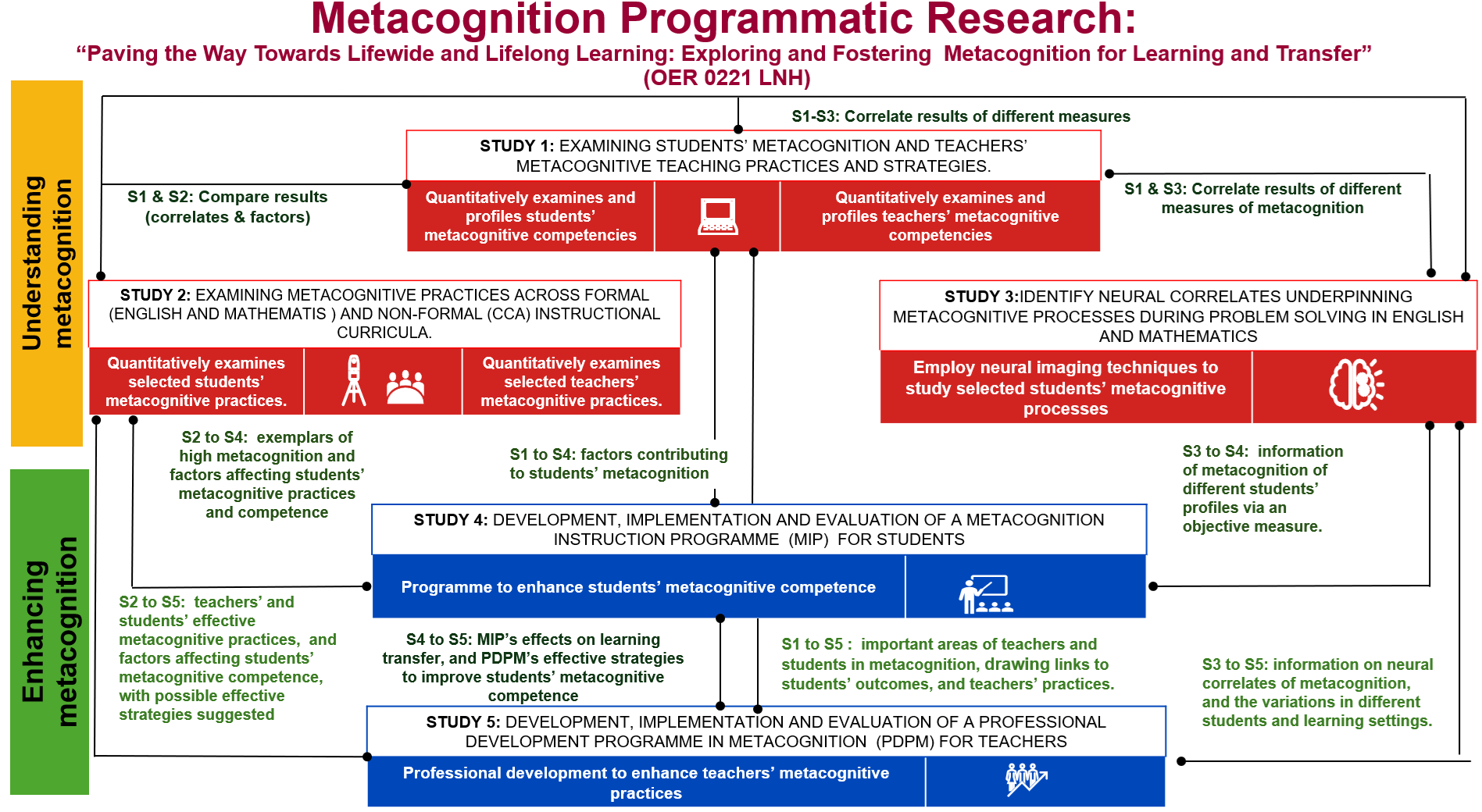
Figure 1. Overview of the research programme “Paving the Way Towards Lifewide and Lifelong Learning: Exploring and Fostering Metacognition for Learning and Transfer” (OER 02/21 LNH). Linkages among the studies are described.
Research Questions
Details of the programmatic research questions can be found in Figure 2 below.
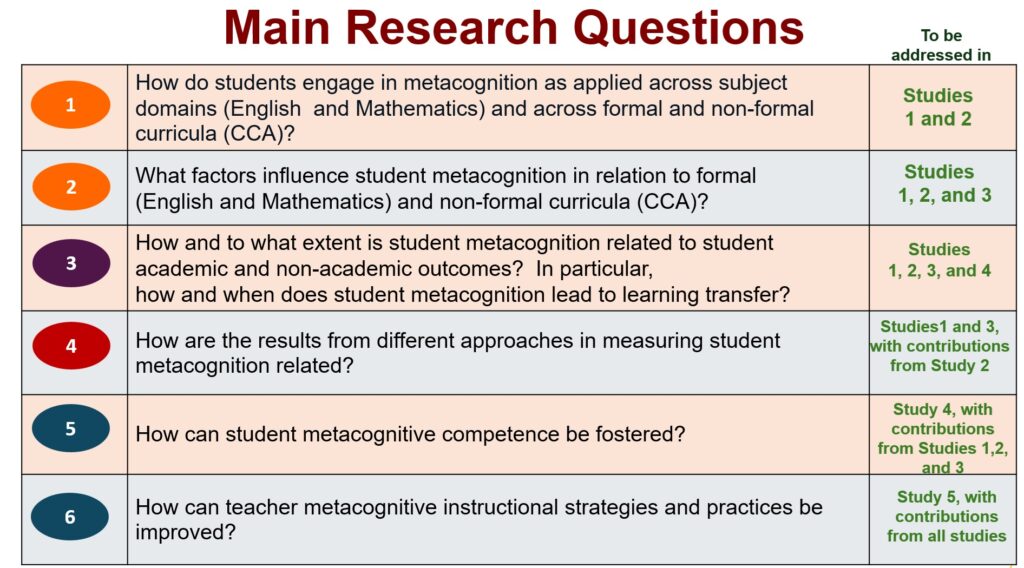
Figure 2. Main research questions for the Metacognition Programmatic Research (OER 0221 LNH) .
To address these questions, the research adopted a multi-stage approach that is projected to be completed in a span of 5 years. The research proceeded in a sequential staircase-like design , with latter studies building upon earlier ones (see Figure 3 below).
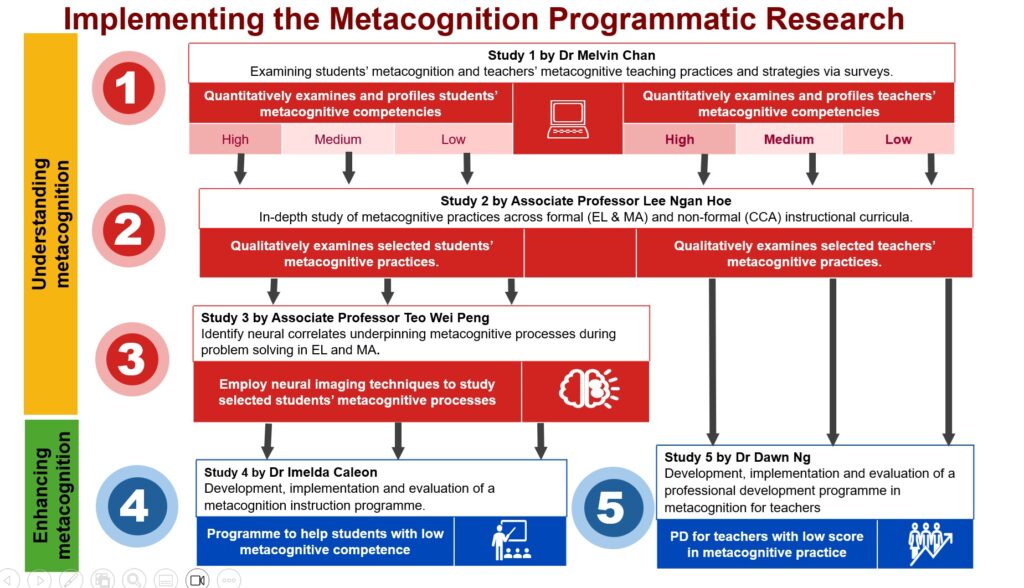
Figure 3. Main research questions for the Metacognition Programmatic Research (OER 0221 LNH) .